Why Salt Air Changes the Look of Outdoor Sculpture
Why salt air changes the look of outdoor sculpture: learn to read surface shifts through material, exposure, drainage, and the sculpture’s coastal setting.
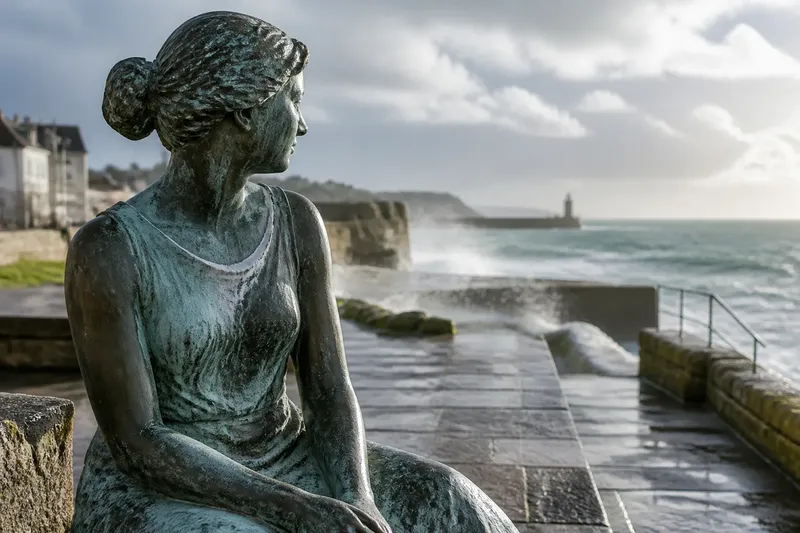
Why salt air changes the look of outdoor sculpture is a question you can often answer by looking closely at the surface and then at the place around it. A bronze figure near a harbor may darken unevenly, while a stone carving on an exposed headland develops softened edges and pale deposits; those differences are not simply signs of age, but traces of material meeting a particular coastal environment.
Salt-laden air carries tiny droplets and particles that settle on outdoor surfaces. Wind, rain, humidity, sun, and the sculpture’s shape all affect what happens next. A change may be a stable part of a work’s appearance, an active surface process, or a mixture of both. Interpreting it well means resisting the urge to treat every alteration as either damage or intended patina.
Salt at the surface
Sea spray can carry dissolved salts onto a sculpture, especially where wind pushes water inland or waves break against a shore. Once droplets evaporate, salt may remain as a thin residue. Rain can dissolve and move that residue, leaving it to collect in seams, recesses, or sheltered faces.
Salt is only one part of the story. Moisture can linger in shaded hollows; strong sun can dry one side more quickly than another; airborne sand can abrade exposed edges. A sculpture facing prevailing winds may therefore look different from a similar work placed behind a wall, even within the same coastal town.
Look for patterns rather than a single dramatic mark. A pale crust concentrated in a crevice suggests a different process from a broad, even color shift. A change that follows the shape of a drip line may reflect runoff. Repeated wetting and drying can leave surfaces with layers of subtle variation rather than a uniform coating.
Material leaves clues
Bronze, iron, steel, stone, and concrete do not respond in the same way. Bronze may develop a patina, a surface layer whose color and texture depend on the alloy, exposure, and past treatment. Green or brown tones can be part of a stable patina, but powdery or actively spreading areas may call for closer attention from a conservator.
Iron and some steels can form rust when moisture and oxygen reach the metal. Salt can encourage corrosion, and the resulting orange-brown marks may stain nearby stone or run down a sculpture after rain. Stainless steel resists corrosion better than ordinary steel, but its performance depends on the grade, finish, joints, and exposure; a reflective surface can also show salt film and water spots clearly.
Stone varies too. Porous stone can absorb moisture and dissolved salts, while denser stone may show deposits mainly on the surface. Salt crystals can form as water evaporates, sometimes producing a powdery bloom or contributing to small flakes at vulnerable areas. Concrete may show pale mineral deposits from moisture movement, and a coating can alter how water enters or leaves the material.
These visible clues do not identify a problem with certainty. A conservator may need to distinguish salt residue from mineral deposits, corrosion products, biological growth, or remnants of an applied finish. The maker’s material notes and care guidance are useful context, especially before anyone tries to clean the surface.
Setting shapes appearance
Distance from breaking waves matters, but it is not the only measure of exposure. A sculpture on an open promenade can receive wind-driven spray, while one set farther inland may sit in a humid, sheltered courtyard where surfaces dry slowly. Nearby buildings, trees, sea walls, and the sculpture’s orientation change airflow and shade.
Drainage is equally visible. A projecting ledge may shed rain cleanly; a narrow groove can hold moisture; a hollow base may collect water or debris. Where water repeatedly runs over a face, it can create streaks that look like deliberate color or texture. The surrounding ground also matters: splash from paving, soil, or a seawall can leave marks distinct from airborne salt.
For interpretation, compare faces that receive different exposure. The windward side may be rougher or more coated, while a protected back retains a smoother finish. This contrast can reveal how the work occupies its site without proving that every visible difference came from salt. Light changes the reading, too: a metallic surface may look dark in overcast weather and bright under direct sun.
A seasonal viewing routine
A useful way to understand change is to observe the sculpture at a steady rhythm across a season, without touching it or attempting maintenance. Choose a public work you can revisit, note the date and weather in plain language, and view it from the same accessible locations. The aim is a record of appearance and setting, not a diagnosis.
- Early in the season: Note the sculpture’s material if it is identified, its orientation, nearby shelter, and the condition of visible surfaces. Record where water might drain or collect.
- After a windy, wet spell: From a safe public viewpoint, look for fresh streaks, deposits, or changes in sheen. Describe their location rather than assigning a cause.
- During a dry interval: See whether pale residue remains, whether a surface looks different when dry, and whether shaded recesses appear damp longer than exposed faces.
- After a rain shower: Observe runoff paths and the areas that stay wet. Avoid approaching slick ground, climbing on the base, or touching the artwork.
- Near the season’s end: Compare your notes and images from the same viewpoint. If a change appears substantial or active, share the observations with the site manager rather than cleaning or scraping it.
Say you revisit a bronze figure on a harbor walkway after a spell of windy rain. You notice a pale trace beneath a shoulder and darker color in a sheltered fold, then record that the trace was more apparent while damp and less obvious after dry weather. That observation helps a caretaker decide what to monitor, while avoiding an unsupported claim that the pale mark is salt or that the darker area needs treatment.
Photographs can help, but keep the conditions comparable: similar viewing angle, distance, and light when possible. A close-up without a wider view can hide the feature’s relationship to the whole sculpture; a wide view alone can make subtle surface changes hard to see. Notes about recent weather and shade give the images useful context.
Reading change carefully
Not every change diminishes a work. Artists may choose materials and finishes that acquire visible character outdoors, and a patina can be integral to how a sculpture is understood. At the same time, active corrosion, loss of material, or repeated flaking may threaten the object. Appearance alone cannot always distinguish an intended finish from a developing condition.
Look for progression and location. A consistent, gradual shift across a surface may be different from a new patch that spreads from a joint or an edge. A deposit that returns after rain could indicate an ongoing moisture path. These are reasons to document and ask, not invitations to remove the mark.
Interpretation also depends on the work’s history and care. A surface may have been coated, cleaned, repaired, or deliberately left untreated. The same material can respond differently depending on fabrication and previous intervention. Where the right response depends on material specifications or the artist’s instructions, consult the responsible institution or a qualified conservator.
Questions about salt air?
Does salt air affect every outdoor sculpture?
Salt exposure can reach many coastal sites, but its effect depends on the material, surface finish, distance and direction from the sea, and local shelter. A sculpture behind buildings may experience a different pattern of wetting and drying from one exposed to open wind.
Are green marks on bronze always damage?
No. Green tones can belong to a stable bronze patina, but color alone cannot show whether a surface is stable or actively changing. Avoid scraping or polishing; a conservator familiar with the work can assess uncertain areas.
Can a pale deposit be identified by sight?
Not reliably. Salt, mineral deposits, concrete residue, and other surface materials can look similar, and moisture can change their appearance. Note where the deposit sits and how it relates to runoff, then leave testing and treatment to qualified care staff.
Should visitors touch or clean a sculpture?
No. Touch can transfer oils or grit, and an improvised cleaner or brush may alter a fragile finish. Follow posted site guidance and report a concern to the organization responsible for the artwork.
What observation can offer
A careful viewing routine helps separate what you can see from what you can only infer. The exact color, location, and relation to wind, shade, and runoff are useful observations; the chemical cause and appropriate treatment may require specialist knowledge. That distinction lets visitors notice change without turning uncertainty into a diagnosis.
For why salt air changes the look of outdoor sculpture, the most helpful answer is specific to each work: its material, the way it meets weather, and the route water takes across it. When you revisit a sculpture, attend to one surface detail and one feature of its setting. A modest, well-described observation can make the artwork’s coastal life easier to understand—and more likely to receive thoughtful care.