The Postcard View Is Not the Whole Exhibition
Coastal art need not show a scenic shoreline. Read coastal art through the repairs, routines, and boundaries that shape life along the water.
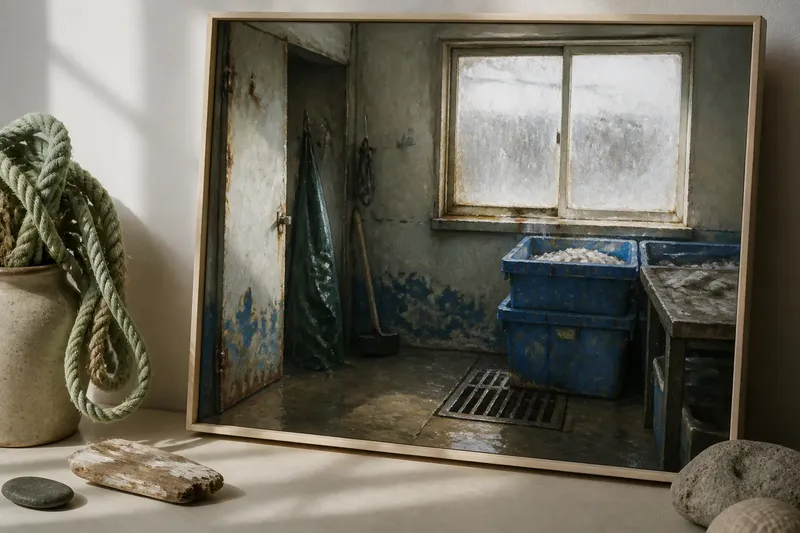
What are you meant to notice in coastal art when there is no sweeping beach or bright harbor? Coastal art can make a salt-clouded window, a patched railing, or a blocked path more telling than a view of open water. The question is not whether a work looks coastal, but what its materials and framing ask you to see.
A shoreline is lived in as well as looked at. Its cultural life includes maintenance, access, work, memory, and the ordinary adjustments people make to weather and terrain. A painting, photograph, installation, or performance can bring those conditions forward without turning them into a picturesque backdrop.
Read The Coastal Art
Begin with one visible decision: where the artist places the viewer. A harbor seen from an overlook offers a different relationship to the coast than a view from behind a chain-link fence or inside a loading bay. Neither angle tells the whole story, but each makes some forms of access and activity easier to notice.
Then look for details that resist the postcard composition. A crane at the edge of a painting, a strip of water nearly hidden by buildings, or a gate dividing a public path from a work area can shift a familiar scene toward questions of use and ownership. The image can remain beautiful while also showing that a waterfront is maintained, built, and sometimes restricted.
Say you enter a gallery expecting seascapes and find a small painting of a fish-market back room: a drain, blue bins, and a window clouded by salt. You first note the room’s surfaces, then the placement of the bins beside the drain, then the absent view beyond the glass. The resulting reading is not a guess about any worker’s feelings; it is an observation that the painting directs attention toward cleaning, storage, and the conditions of work.
Notice Labor And Wear
Coastal work often appears through traces rather than portraits. Scuffed floors, repaired nets, salt-stained doors, and worn handrails point to repeated use. When people are present, tools and gestures can keep them from becoming symbols of a generalized “coastal life.”
Materials also shape the meaning. A collage made with fragments of rope feels different from a precise drawing of the same rope; a performance built around a repeated lifting motion gives duration and effort a place in the work. Notice whether wear is painted, photographed, assembled, or performed, and consider how that choice guides your attention.
It is not worth the effort to identify every stain as evidence of a particular storm or event unless the artwork or its label provides that context. Stay with what can be seen: a surface has been patched, a route appears blocked, or a gesture repeats. Those observations are enough to begin a grounded interpretation without turning the gallery into a guessing game.
Follow Memory And Weather
A familiar coastline can bring recognition, but recognition is not the same as memory. A repeated shape, blurred edge, or altered scale may suggest how a place changes in recollection. You can attend to those choices even if the depicted location is unfamiliar.
Objects may carry time without explaining it. A faded notice beside a family photograph, or a map placed next to a fragment of rope, invites you to consider what has been kept and what has been left out. A label may name an artist’s source; your own reading can remain close to the arrangement, color, and gaps in the work.
Weather, too, can register as a steady condition rather than a dramatic storm. Lifted paint, dulled light, damp-looking paper, or a sound piece shaped by wind can make exposure and upkeep palpable. Ask what the material makes you notice: instability, maintenance, or the gradual accumulation of wear.
Look At Built Edges
Roads, piers, seawalls, sheds, parking lots, and service buildings are part of the cultural landscape of a coast. They may be designed for use rather than display, yet their edges reveal how people move through a place and which activities it accommodates.
Look at thresholds: a gate, ramp, blank wall, or narrow passage. In a photograph or drawing, the artist’s vantage point can make a familiar waterfront feel open, enclosed, or difficult to reach. A polished architectural image may emphasize planning; a rough assembly of fragments may draw attention to repair. The form does not settle what is true about the place, but it shapes what you can see.
Questions About Coastal Art?
Can coastal art omit the sea?
Yes. Materials, work routines, weather, access, or a built waterfront can establish a coastal subject without a visible horizon. Follow what the work shows rather than searching for water as proof.
How should I use the gallery label?
Use it for the names, materials, and context the venue provides, then return to what is visible in the work. A label can add a route into the piece without dictating every response.
What if I do not know the place?
Start with scale, texture, viewpoint, repeated forms, and the relationship between people and objects. You can notice how the work organizes attention without claiming local knowledge.
Can a scenic image also show labor?
Yes. A harbor view may include equipment, barriers, or signs of repair that complicate its attractive surface. Notice what the image emphasizes and what its framing leaves beyond view.
Choose One Detail
Before moving on, choose a detail you can point to: a patched surface, a blocked path, a repeated gesture, or light falling across a service door. Then ask what that detail changes about your first impression of the work. This small act of looking keeps interpretation tied to the object rather than to a broad claim about coastal life.
Coastal art becomes easier to read when the postcard view is treated as one choice among many. A painting may make a harbor memorable through its horizon; another work may make the same kind of place present through repair, access, or routine. Near the end of a visit, return to the detail you chose and see whether it points to a practical question you would carry beyond the gallery: who maintains this place, who can enter, or what must be repaired before the view is enjoyed.