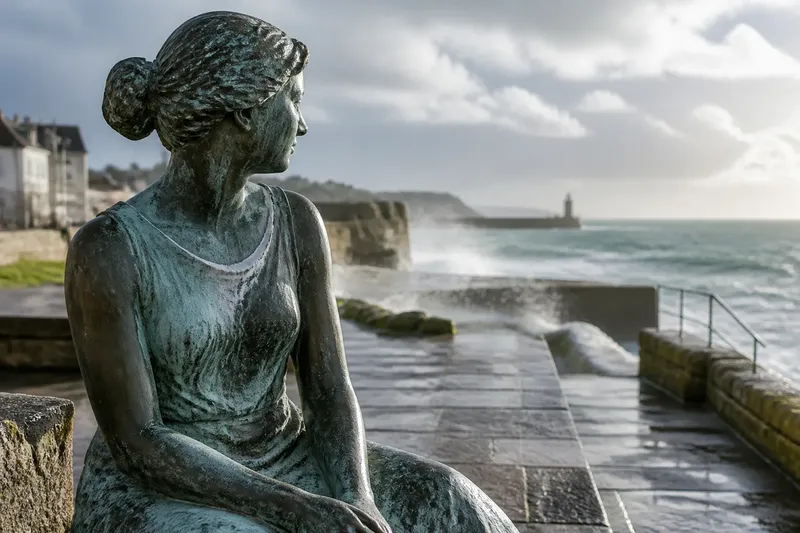
From Platform to Playhouse: The Changing Use of a Coastal Pier
The changing use of a coastal pier can honor its working past while making room for local art, public routines, and events that leave access open.
Who gets to decide what a coastal pier becomes after its working purpose fades? The changing use of a coastal pier is rarely a clean handoff from industry to leisure; in places such as San Francisco’s Hyde Street Pier, maritime memory remains present alongside visits, interpretation, and waterfront recreation.
That overlap offers a more useful way to think about piers than a simple ladder from platform to promenade to stage. A place can carry the marks of labor while hosting new cultural life, but the balance depends on local history, daily users, and the limits of the structure itself.
Labor in the landscape
A working pier organizes movement: people load or unload, wait for transport, fish, or tend equipment. Those routines leave practical forms behind—open deck space, rails, mooring points, and a clear route from shore—which later users may inherit without knowing why the structure was laid out that way.
San Francisco’s Hyde Street Pier makes the relationship between maritime work and public interpretation especially visible. Historic vessels moored there connect the waterfront to the city’s seafaring past, while the pier’s present cultural role invites visitors to encounter that history rather than treating the harbor as a blank scenic backdrop.
Not every pier has preserved vessels or a museum setting. On a smaller working waterfront, a painted name, a surviving bollard, or a fisher’s customary place to prepare gear may carry more local meaning than a polished interpretive display. The point is not to freeze a site in its former use, but to let its material evidence inform what happens next.
Public life in layers
A coastal pier can support several roles without moving through them in a fixed sequence. A morning walk, an afternoon fishing spot, and an evening performance may occupy the same boards, provided each activity leaves room for the others and respects the pier’s operating rules.
The walking route
As a promenade, the pier extends an ordinary public walk into a place where land and water meet. People may pause at a rail, watch boats, or recognize neighbors; those unplanned uses are cultural life, even when there is no program to announce them.
Small additions can support that role without taking it over. A bench positioned outside the main path, a locally written noticeboard, or a modest marker explaining a working feature can invite attention while leaving visitors free to keep moving.
The community gathering
Markets, maker demonstrations, and local music can turn a pier into a meeting place for a specific occasion. The event feels rooted when it reflects the people and skills of the waterfront—such as net mending, boatbuilding, or a neighborhood music tradition—instead of importing a generic festival format.
Temporary stalls and audiences can also narrow a route that fishers, workers, or passersby still need. A designated event area and a plainly visible through-route make the arrangement easier to understand, but the people responsible for pier operations must determine what is permissible.
The performance setting
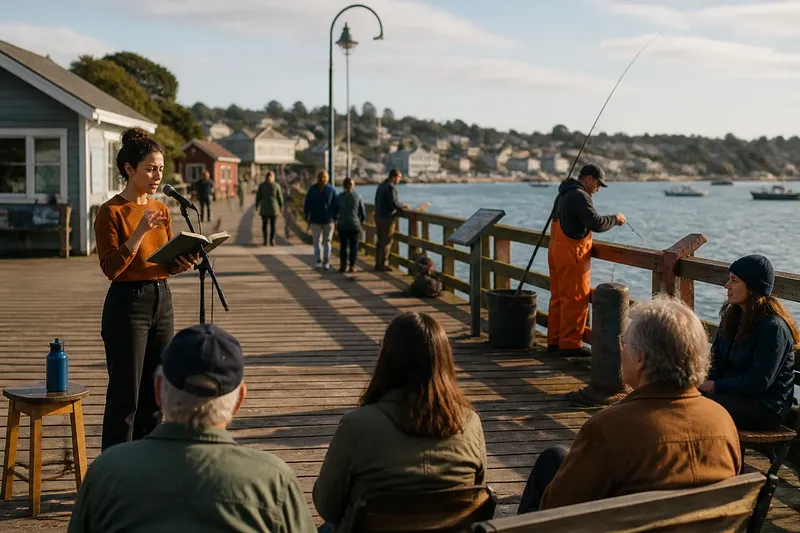
Readings, storytelling, dance, and small musical performances can respond to the site’s wind, tide, and harbor sounds. A performance becomes specific to its setting when those conditions shape its form, rather than serving as scenery behind an event that could happen unchanged in any hall.
That choice has limits. Wind can blur speech, moving crowds can disrupt a quiet piece, and audiences may need to stand or shift position. Organizers should follow the venue’s guidance and local requirements, and choose a form that can accommodate the conditions instead of trying to overpower them.
What fits this pier?
How can a pier’s working history shape an event?
Start with what remains visible and what people still do there: a loading route, a fishing corner, or a familiar meeting point. An event can acknowledge those details through its location, subject, or schedule rather than covering them with decoration.
Can performers share space with fishers?
Possibly, if the pier’s operating rules allow it and the event does not block access or interfere with routine work. Organizers should ask the people who use the area and the site’s operator before settling on a layout or time.
Which performances suit an open waterfront?
Storytelling, short readings, and music that can tolerate movement may be more adaptable than work requiring silence and fixed sightlines. The choice should reflect the audience, the acoustics, and the specific pier, not a general preference for one art form.
A worked pier plan
Imagine a fictional neighborhood pier with a fishing corner near the shore, a clear stretch of deck farther out, and residents who want a modest cultural event. The starting point is a proposed reading, with no assumption that the pier can close or be reserved.
- Ask the pier operator whether readings are permitted and which areas must stay clear; if the open stretch is approved, consider it for the event, and if it is not, move the reading to an authorized nearby space.
- Speak with fishers about their usual access and busy periods; if a time leaves their routine undisturbed, retain it, and if it conflicts, choose another permitted time.
- Walk the proposed route with a simple paper layout showing the audience area and passage; if people can pass without entering the listening space, keep the arrangement, and if they cannot, reduce or reposition the audience area.
- Ask a reader to deliver a short passage in the open air; if the words remain understandable amid ordinary harbor noise, proceed with that format, and if they do not, choose a more visual or participatory form.
- Share a plain notice stating the subject, expected format, and that people may come and go; if residents understand what is planned, keep the notice, and if questions reveal confusion, revise it before inviting the public.
- Afterward, ask users whether access remained clear and note where people gathered or passed; if the arrangement worked for both listeners and routine users, consider it again, and if it caused obstruction or discomfort, change the location or format next time.
In this invented situation, the decision is not simply “hold the reading” or “cancel it.” If the operator permits the activity, users can retain access, and the words carry in the chosen spot, the reading has a plausible place on the pier; if any condition fails, the plan changes rather than asking other users to yield.
It is not worth the effort to make every visit feel curated with a dense trail of signs, staged photo stops, and a packed calendar. A public pier also needs room for solitude, unplanned conversation, and the simple act of turning around to look at the shore.
Performance with permission
A pier performance should be shaped by practical conditions as well as artistic intention. Keep the audience area distinct from the route, use direct language in any invitation, and tell people whether they can arrive late or leave freely. Those details help a visitor judge whether the event suits them without making the pier feel like a closed venue.
Sound equipment is not a substitute for considering neighbors, wildlife, or site rules. For any formal event, organizers should consult the pier operator about access, equipment, crowd arrangements, and applicable local requirements; where safety or accessibility questions arise, seek guidance from the responsible qualified professionals.
The changing use of a coastal pier is most compelling when new cultural activity makes its layered history easier to notice. A reading beside a working harbor, a maker demonstration near an old landing, or a quiet walk past moored vessels can each belong, so long as the people who rely on the place remain part of its public life.