A Small-Room Plan for Hosting an Informal Reading
Plan a small-room poetry reading that responds to salt air, harbor noise, and narrow entrances, while giving readers and listeners a comfortable way to gather.
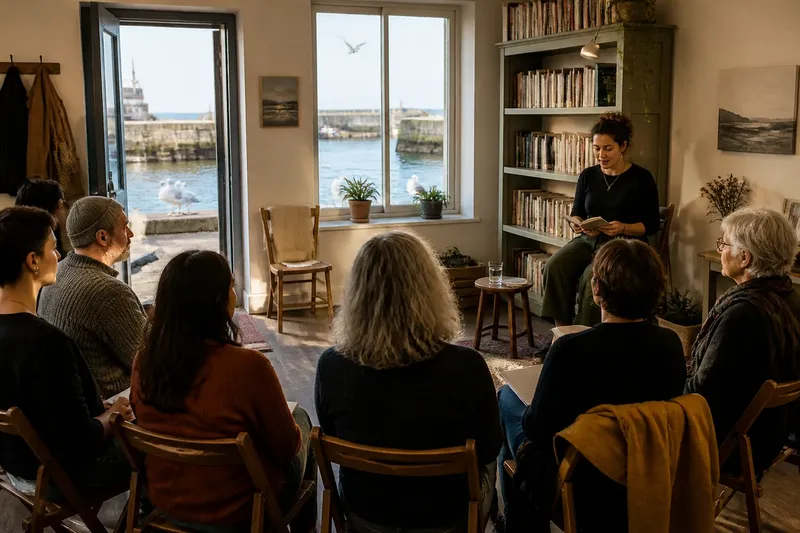
How do you host a small-room poetry reading when the harbor wind rattles the windows and the doorway opens straight onto the chairs? A small-room poetry reading can feel connected to its shoreline without asking the audience to compete with it: let the room’s sounds and thresholds shape where people listen, pause, and speak.
Read the shoreline
Before moving furniture, notice what comes in from outside. A gust under the door, gulls over a quay, or the soft clatter of boats against a harbor wall may be part of the room’s character, but each can make a quiet line difficult to hear. Visit at the time of day the reading will take place, and listen from the seats rather than only from the entrance.
Ask the room’s caretaker whether a window can be closed, a door can be held open, or a draft stopper can be used without creating access or fire-safety problems. Keep the route to the exit and any facilities clear. In a café, library, community hall, or coastal studio, check the venue’s access arrangements with the people responsible for it.
Make a quick sketch on scrap paper. Mark the entrance, windows, fixed furniture, and the place where outside sound is strongest. Then choose a reading spot where the speaker’s voice can travel into the room without turning their back on the listeners.
Arrange a listening curve
A shallow arc often works better than a straight row in a compact space: listeners can see the reader and each other, and latecomers can find a seat without asking a whole row to stand. Keep a clear route from the entrance to the seats and onward to the exit. Put a chair near the doorway for someone who may need to step out and return quietly.
Use stable chairs the venue already has, and leave some open space rather than filling every corner. If the room has a sea-facing window, avoid placing the reader directly in front of bright glass; faces can become hard to see. A view can remain part of the gathering without becoming the backdrop that silhouettes the person speaking.
Skip a table between the reader and the audience unless it serves a real need. A small side table can hold water and a running order. Elaborate coastal décor is not worth the effort if it narrows a passage, rattles in the wind, or makes guests worry about touching it.
Give poems a setting
The reader does not need a stage. A chair at the open end of the arc, a standing spot beside a bookcase, or a cushion on a low platform can work if the person remains visible and comfortable. Ask readers beforehand whether they prefer to sit or stand, and tell them what the room can offer.
Set a small surface nearby for glasses, notebooks, or water, but keep it out of the walking route. If the room has a microphone, decide whether it helps listeners at the far side hear clearly. A brief sound check from the farthest seat can guide that choice; equipment that distracts from the voice is not an improvement.
Ask each poet how to pronounce their name and how they want to be introduced. A concise introduction might mention a connection to the coast if the reader wishes, but should not explain what a poem means before the audience hears it. Let the work meet the room on its own terms.
Shape the sequence
Plan the order before guests arrive, while leaving room to adjust if someone is delayed. In the welcome, explain who reads first, how turns will work, and whether conversation is planned. A simple frame gives people permission to settle without making an informal gathering feel ceremonial.
Begin with a short reading that gives the room time to quiet down. Then vary the voices and textures rather than placing every hushed poem together. Ask readers to choose a small selection ahead of time, so the event has space for listening instead of feeling like a procession of pages.
If the gathering needs a pause, make its boundaries clear. In a coastal venue, opening a window may bring in surf, wind, or traffic as well as fresh air; do so only if the weather, sound, and venue rules allow it. Otherwise, invite people to stretch and refill water, then say when the readings resume.
Imagine a community studio with six readers, a narrow entrance, gulls audible from the street, and chairs that can form a curve. The host listens from the back seat, notices that the window-side reading spot is hard to hear, and moves the reader to the bookcase; each poet chooses one piece, and the host keeps the doorway clear. The resulting arrangement should make the voice easier to follow while leaving the street sounds as a passing part of the evening, not a barrier to it.
Welcome different ways
At the door, point out where coats can go, which seats are open, and how to reach the exit. A handwritten running order can help people follow the sequence, especially if the room’s sound changes as the door opens. If seats are unassigned, say so plainly.
Tell listeners whether comments are welcome after each reading or whether conversation will come at the end. Either approach can work; uncertainty is what makes people hesitate. Offer a quiet way to take part, too: a listener can write a note, stay silent, or leave after the final poem without being singled out.
Keep the host’s own pace unhurried. Speak clearly, leave a breath between introductions, and resist filling every pause. A moment of silence can let a poem settle, while a rush of announcements can make the room feel smaller than it is.
What should you decide first?
How many readers fit?
Choose a lineup that leaves each person time to read without rushing and leaves listeners room to stay attentive. If the room feels crowded during the chair setup, shorten the lineup or invite fewer readers rather than adding seats into the walking route.
Should readers use a microphone?
Ask someone to listen from the farthest seat while a reader speaks at an ordinary volume. If the words are hard to catch, try a microphone or change the speaker’s position; if they are clear, keep the equipment out of the room.
Can the audience respond after each poem?
Choose a response format that matches the gathering: a brief pause, one invited comment, or conversation at the end. Tell everyone which format you have chosen before the first poem, so listeners do not have to guess when to speak.
What if a reader arrives late?
Leave some flexibility in the sequence, and ask the reader privately whether they would like a later turn or would rather listen. If moving them would disrupt the flow, offer a place at the end or let them attend without reading.
Check the room details
- Check whether wind or harbor noise reaches the reading spot; if words are difficult to hear, move the reader or close the window if the venue permits, otherwise choose a quieter position.
- Check that the entrance, exit, and route to facilities remain clear; if a chair blocks a route, move it or remove a seat rather than narrowing the passage.
- Check whether the reader is visible against window light; if their face is obscured, change the angle or reading spot instead of adding decorative lighting.
- Check whether listeners at the farthest seat can hear an ordinary speaking voice; if not, reposition the reader or use a microphone, otherwise leave amplification aside.
- Check where coats and bags can go without occupying seats or routes; if the proposed spot is in the way, ask the venue about another location or keep belongings with their owners.
- Check whether printed poems have the writers’ permission; if permission is absent, list titles and names only or skip the handout.
- Check whether the water table or programs crowd the reading area; if they do, move them to a side surface or remove anything unnecessary.
Before people arrive, put away objects that rattle or invite handling, and place water where it will not obstruct the reader. A short sound check from the farthest chair can reveal whether the reading spot or chair arc needs to change. Keep that check practical; adding equipment by default solves no problem the room does not have.
Close the gathering gently
End with a clear signal rather than letting the evening trail off while people wait for another reader. Thank the readers and listeners, then say whether there is time to talk or whether the venue needs to be cleared. That gives everyone a natural choice to stay, leave, or help tidy.
Afterward, remember what the room taught you: perhaps the doorway carried more wind than expected, the window made a reader hard to see, or a pause helped listeners settle. For the next small-room poetry reading, keep the useful details and leave the rest behind. The shoreline can remain audible and present, while the room still gives each voice a place to arrive.